
Reaction videos are becoming a strong trend on all social media platforms. However, reusing part of original content such as movies, music or videos of others always makes many content creators wonder: Do you need permission from the owner to make a reaction video? Is just “commenting more” considered legal, or is there still a risk of copyright claims? In this article “Do I need permission from the owner to make a reaction video?” , VCD will help you understand the legal regulations, cases where permission is required and how to make reactions safely to avoid risks.
What is a reaction video? Why is it often copyrighted?
A reaction video is a type of video in which the content creator watches, reacts, analyzes or gives personal opinions about a video, music, movie trailer, product or any content owned by someone else.
Although it is only “watching and commenting”, reactions often reuse images – sounds – videos of the original work, and these elements are all protected under the Intellectual Property Law 2022.
Therefore, if the person making the reaction video reuses a video, movie scene, background music… without permission, the video is easily copyrighted and causes related consequences.
- Block the video in some countries or worldwide.
- Report copyright infringement.
- File a complaint or civil lawsuit if requested by the owner.
In short, reaction videos are a high-risk form of content if the law is not properly understood.
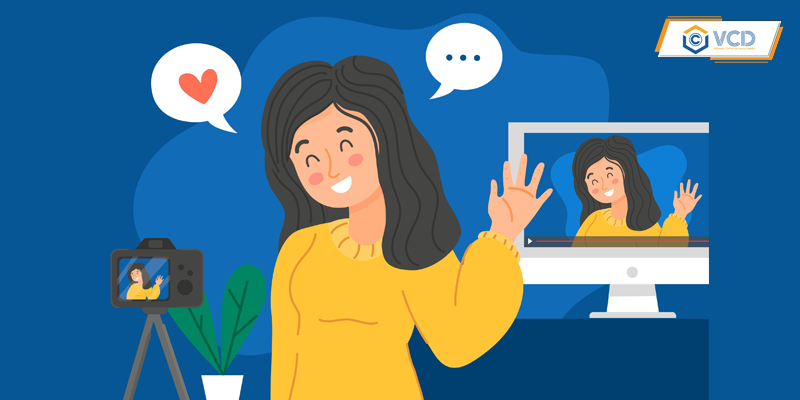
Do you need permission from the owner to make a reaction video?
According to Articles 20 and 28 of the Intellectual Property Law 2022, the author or owner of a work has full control over the exploitation of his or her work. These rights include:
- The right to copy the work in any form;
- The right to distribute copies to the market;
- The right to communicate the work to the public, including publishing on digital platforms such as YouTube, TikTok, Facebook;
- The right to create derivative works, such as editing, modifying, cutting or transforming the original work into another form.
When you create a reaction video, you essentially reuse all or part of the original work (for example, music videos, movie trailers, review videos, TV shows, etc.). Inserting the original video or audio into a reaction clip and posting it on a social media platform is considered copying and communicating to the public, two rights that belong exclusively to the author/owner of the work.
This means that any unauthorized use can be considered copyright infringement, whether you only use it for a few dozen seconds, have cited the source, or simply “react for fun”.
Many people still mistakenly believe that reactions “do not affect the original” or “are of a commentary nature”, so they do not need permission. However, current Vietnamese law does not have a separate provision that gives priority to reaction content. As long as you reuse a copyrighted work and post it publicly, in principle you must ask for permission or be allowed to use it by the owner.
How to ask for permission to make a reaction video (simple & feasible)
To make a reaction video professionally and legally, asking for permission from the original work owner is almost a mandatory step, especially when you intend to monetize the content. The actual permission process is not too complicated if you follow the following 4 steps:
Step 1: Identify the owner
First, you need to know exactly who holds the rights to the work you want to react to.
Depending on the type of content, the owner can be:
- Film studio or production company (for movie trailers, movie scenes);
- Singer, management company, record label (for MV, song);
- Game publisher (for game trailers, cinematic);
- TV station or show producer (for reality shows, game shows).
If the content appears on YouTube, you can check the video description or the “Details” tab, which usually provides a contact email with the line “For copyright inquiry / Copyright contact”. This is the official address for you to send a request for permission.
Step 2: Send a request to use the work
After identifying the correct owner, you compose a clear and polite email requesting permission. The email content should include:
- The work you want to use (song name, trailer, program episode …).
- Scope of use: how many seconds, which part to use.
- Purpose of use: create reaction videos, give comments, give feedback.
- Form of exploitation: whether the video is monetized or not.
- Commitment to compliance: Do not distort the original content; only use a small part; clearly cite the source; be ready to remove if the owner requests.
- Some owners will require more: Written agreement; revenue sharing; send a demo before posting. Being proactive and clear will increase the likelihood of approval.
Step 3: Get feedback and save evidence
If the owner agrees, you should save the consent email as a PDF, take a screenshot of the confirmation message.
This is very important, because if the video is copyrighted, you can send evidence to appeal and keep your video intact. Even if they do not respond, the fact that you sent an email asking for permission also shows goodwill and can be a factor that helps you reduce the level of handling when a dispute occurs.
Step 4: Implement the reaction as committed
Even if you have permission, you still need to follow the basic principles to ensure that the video is not considered a copy of the content:
- Only use the necessary part, avoid playing the whole or too long for the purpose of commenting.
- Always add comments, analysis, personal evaluation, this is the factor that makes the video creative, not “copying the original content”.
- Create new value for viewers, for example: analysis of camera angles, acting, meaning, technique, emotions…
- Clearly state the source in the description or right in the video.
If you do not fulfill your commitment, the owner has the right to revoke the permission to use or request YouTube to remove the video.
The above are detailed analyses to help you understand whether or not you need permission from the owner to make a reaction video and how to comply with the law when creating content. If you need further support on copyright procedures or want to optimize the content for “copyright safety”, VCD is always ready to accompany you.
Sincerely,
FAQ
1. How many seconds from the original video is considered legal to use to make a reaction video?
There is no legal provision allowing the use of “5 seconds”, “10 seconds” or any fixed duration. Any act of copying or quoting without permission and without ensuring the analysis and commentary elements that change the content is at risk of violating.
2. When should you ask for permission from the content owner before making a reaction video?
Asking for permission before making a reaction video is always a safe choice, showing respect for the author or owner of the work. You should especially ask for permission when using copyrighted videos or data with a significant duration, little editing, or when the original content is exclusive and the owner sets regulations to limit exploitation and reuse.