
Derivative works are a common form of creation where a new work is formed based on a pre-existing work. However, not all adaptations, modifications, translations, or reinterpretations are legal. So, what is the boundary between legal derivative works and copyright infringement? Let’s explore this in the article below.
What is a derivative work?
According to Clause 8, Article 4 of the 2022 Intellectual Property Law: “A derivative work is a work created on the basis of one or more existing works through translation, adaptation, modification, transformation, selection, or arrangement.”
Simply put, a derivative work is a new work formed from the foundation of an original work, through a process of recreating it in a different form of expression or with certain changes or additions to its content, structure, language, or method of expression.
Common forms of derivative works include:
- Translating books and stories from foreign languages into Vietnamese
- Adapting novels into films, plays, and comics
- Adapting song lyrics and scripts to suit new contexts
- Selecting and arranging articles into anthologies and collections
A distinctive feature of derivative works is that they still bear the imprint and core elements of the original work. Despite new creative elements, the content, ideas, plot, characters, or structure remain closely related to the original work. Therefore, creating derivative works is always linked to the rights of the author or copyright owner of the original work.
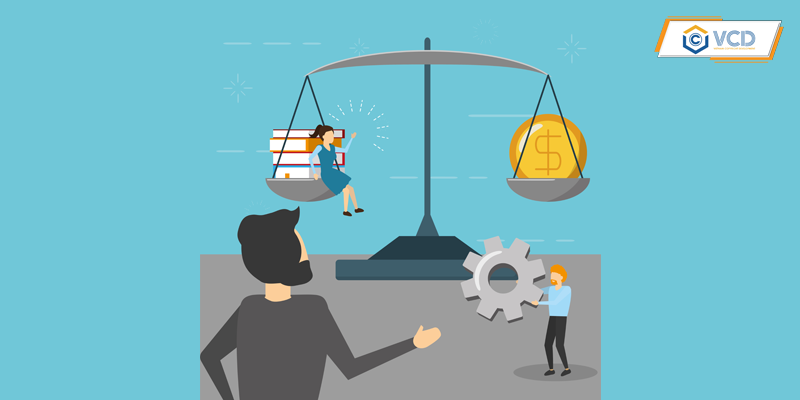
Conditions for a derivative work to be considered legal
The law does not prohibit the creation of derivative works. On the contrary, this is an activity that is recognized and encouraged, as it contributes to enriching creative life. However, since derivative works are always based on the foundation of the original work, this creation must respect the rights of the author or copyright owner.
According to Articles 14 and 20 of the 2022 Intellectual Property Law, the right to create derivative works is a property right belonging to the copyright owner. This means that, in principle, no one can arbitrarily adapt, modify, translate, or create derivative works without permission.
For a derivative work to be considered legal, it must simultaneously meet the following conditions:
Condition 1: Permission from the copyright owner (when the work is still under protection)
This is the most important and decisive condition. While the original work is still under copyright protection, any actions such as translation, film adaptation, content modification, selection, rearrangement, etc., must be with the consent of the copyright owner.
This permission should be documented in writing (contract, agreement on the use of the work) to avoid future disputes. Without permission, even if the derivative work has new creative elements and significant intellectual investment, it will still be considered a copyright infringement under Article 28 of the Intellectual Property Law.
Condition 2: It must not harm the moral rights of the original author.
Even with permission to create a derivative work, the creator must still respect the moral rights of the original author under Article 19 of the 2022 Intellectual Property Law, especially the right to be credited as the author and to protect the integrity of the work.
A derivative work must not: distort the content of the original work; misrepresent the original spirit and message; or alter it in a way that affects the honor and reputation of the original author. In other words, the new creation must not distort the core value of the original work.
Condition 3: Case where the original work’s copyright protection has expired
When the copyright protection period for a work has expired, the work belongs to the public. At this point, anyone can use it to create derivative works without permission and without paying royalties.
However, even in this case, the user must still acknowledge the author’s name and respect the integrity of the work because moral rights are protected indefinitely.
In short, a derivative work is only considered legal when its creation does not infringe on the property rights and moral rights of the original author. This is the crucial legal boundary that distinguishes between legitimate creation and copyright infringement.
When does a derivative work infringe copyright?
In reality, many people believe that simply “renovating,” “editing,” or “creatively adding” is enough to create a completely different work. However, legally, if the new work is still based on the original work but does not comply with the regulations of the Intellectual Property Law, that act is still considered copyright infringement.
According to Article 28 of the Intellectual Property Law, any act of using a work without the permission of the copyright owner is considered infringement. Among these, creating derivative works illegally is a very common form of infringement.
Below are typical cases where a derivative work infringes copyright:
Case 1: Unauthorized adaptation or modification
While the original work is still under protection, any act such as adaptation, translation, modification, or reinterpretation requires the consent of the copyright owner.
Examples:
• Adapting a novel into a film without the owner’s consent
• Rewriting song lyrics and releasing them commercially
Even if the creator invests effort in editing and creating new content, this is essentially still an act of illegally exploiting the original work.
Case 2: Using the core elements and characteristics of the original work
In many cases, while not a verbatim copy, the original work still uses the main plot, characteristic character system, or setting and content that strongly reflect the original work…
When readers and viewers can still easily recognize the “shadow” of the original work, the new work is still considered to be illegally exploiting the original author’s creative material. This is a very common mistake in adaptations and comic book adaptations without permission.
Case 3: Failure to acknowledge the author’s name and source of the work
Even with permission to create a derivative work, the creator must still respect the author’s moral rights according to Article 19 of the Intellectual Property Law.
Failure to acknowledge the author’s name, fail to acknowledge the source of the work, or intentionally mislead others into believing it is entirely their own creation, is still considered a violation of moral rights.
Thus, a derivative work becomes a copyright infringement when its creation infringes upon the property or moral rights of the original author, regardless of the form of “new creation.”
Distinguishing between legitimate and infringing derivative works
Below is a more detailed and clearer comparison table to help readers understand the legal boundaries between legal derivative works and copyright infringement:
| Criteria | Legitimate derivative works | Derivative works infringe copyright |
| Legal basis | – There is a contract or written permission from the copyright owner or the original work whose protection period has expired. – The exercise of the rights granted by the copyright owner is carried out correctly. | – Not seeking permission while the original work is still under protection. – Arbitrarily exercising rights belonging to the owner. |
| Scope of use | Within the permitted scope, purpose, timeframe, and territory. | Unauthorized expansion of exploitation and use beyond the agreed scope. |
| Respect for personal rights | Include the author’s name, but preserve the spirit and core values of the work. | Unauthorized expansion of exploitation and use beyond the agreed scope. |
| The extent of use of the original work | Controlled, within permitted limits. | Retaining the original plot, characters, and distinctive setting makes the original work easily recognizable. |
| Purpose of exploitation | Transparent, legal, and with consent. | Unauthorized commercial exploitation or public dissemination |
| Legal responsibility | No violation | You may be required to remove the content, pay compensation, or be fined for violations. |
| For example | Adapting a novel into a film involves a copyright agreement. | Making films and comics based on popular novels without permission. |
The above is an article titled “ Distinguishing between legitimate and infringing derivative works”. Understanding the legal requirements for creating derivative works will help you avoid copyright infringement risks and legally exploit the value of existing works. Before adapting, modifying, or translating, ensure that you fully respect the property and moral rights of the original author.
Sincerely,
FAQ
Yes. This is an infringement of the author’s moral rights according to Article 19 of the Intellectual Property Law, even if you have been granted permission to create the derivative work.
When the original work’s protection period has expired, anyone can use it to create a derivative work without permission and without paying royalties. However, personal rights must still be respected, such as attributing the author’s name and not distorting the content of the work.