
In the era of booming digital content, creative works based on existing works, such as book translations, film adaptations, and music remixes, are becoming increasingly common. However, many individuals and businesses still mistakenly believe that creating derivative works automatically grants copyright protection. So, under what circumstances are derivative works protected by copyright? Let’s explore this in detail in the article “Under what circumstances are derivative works protected by copyright?” below.
What is a derivative work?
According to Clause 8, Article 4 of the Intellectual Property Law, a derivative work is defined as follows: “A derivative work is a work created on the basis of one or more existing works through translation from one language to another, adaptation, modification, transformation, selection, or compilation.”
Common forms of derivative works include:
- Translation (e.g., translating books, stories, documents)
- Adaptation (rewriting based on the original idea)
- Modification (changing content and structure)
- Adaptation (story to film, story to play)
- Selection (compilation from multiple sources)
- Compilation (synthesizing and organizing materials)
Examples:
- A novel adapted into a film
- A song remixed and rearranged
- A foreign literary work translated into Vietnamese
Thus, a derivative work is a new creative product, but it is formed based on the foundation of the original work.
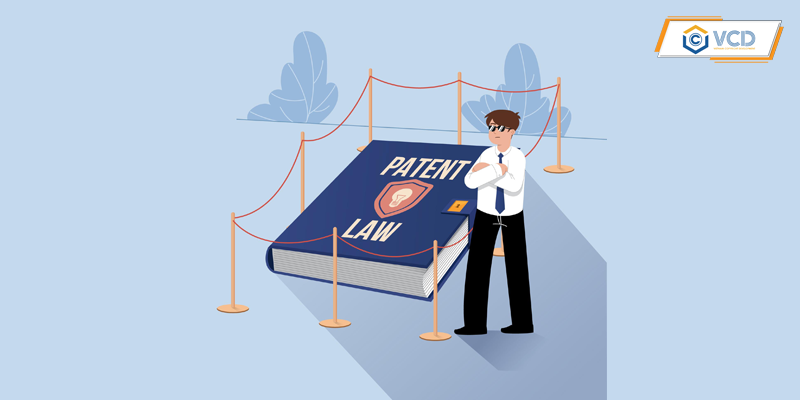
In what cases are derivative works protected by copyright?
According to Articles 14 and 20 of the Intellectual Property Law, derivative works will be protected if they simultaneously meet the following conditions:
Creative nature – a prerequisite
Creativity is the core foundation of all objects protected by copyright. Vietnamese law only protects works created from the direct intellectual labor of the author, bearing a clear personal imprint.
This means that the work must have independent creativity, demonstrated through the way content, language, structure, perspective, or message are expressed – not simply a copy or a slightly modified version of the original work.
Examples:
- Translating a book with a unique writing style and appropriate word choice is considered creative.
- Copying content and changing a few sentences will not be protected.
It can be said that the boundary between legitimate creation and copyright infringement lies in the level of intellectual contribution of the creator of the derivative work. Without this element, the resulting product will not qualify as a “work” under the law, and therefore will not be protected by copyright.
Not infringing on the copyright of the original work
According to Clause 2, Article 14 of the Intellectual Property Law: “A derivative work shall only be protected if it does not infringe on the copyright of the work used to create the derivative work.”
This is an important principle to ensure a balance between the right to create something new and the right to protect the original work.
A derivative work is considered legal when:
- It does not distort or misrepresent the content of the original work.
- It does not misrepresent the message or core values of the original work.
- It does not negatively affect the honor or reputation of the author.
- It does not use the original work in a way that causes economic or commercial damage.
Examples:
- Adapting a literary work into a film while preserving its spirit and main message may be acceptable.
- However, intentionally changing the content in a negative, misleading, or offensive way may be considered copyright infringement.
Therefore, even with creative elements, if that creation affects the legitimate rights of the original author, the derivative work will not be protected.
With the permission of the copyright owner (except in exceptional cases)
According to Article 20 of the Intellectual Property Law, the right to create derivative works is a property right belonging to the copyright owner.
Therefore, to create a derivative work from a work that is still under protection, permission must be obtained, except in cases where the protection period has expired (in the public domain) or in cases where permission is not required by law.
Note: Using a work without permission will be considered copyright infringement (Article 28 of the Intellectual Property Law). In that case, the derivative work will not be protected, even if it has creative elements.
Not falling under the cases excluded from protection
In addition to the above conditions, the derivative work must also not fall under the cases excluded from copyright protection as stipulated by law.
Some common cases include:
- Works that are almost entirely copied from the original, lacking significant creative value.
- Content that violates the law, is contrary to social ethics, or goes against good customs and traditions.
- Works that infringe on the personal rights of other individuals or organizations.
- Products that are mechanically copied or synthesized without intellectual contribution.
If these cases apply, the derivative work will not be recognized or protected by law, regardless of its form of expression.
The above is an article titled “Under what circumstances are derivative works protected by copyright?“. It can be seen that, although a common form of creativity in many fields, derivative works are only protected by law when they fully meet the conditions of creativity, legality, and do not infringe on the rights of the original author.
Sincerely,
FAQ
Yes. 1. Remixing, remixing, or rearranging a song are all considered derivative works. However, to be protected and legally exploited, you need to obtain permission from the copyright owner of the original work, especially when using it for commercial purposes.
Yes. If the derivative work fully meets the requirements of creativity and legality, you can absolutely register copyright. However, when registering, you need to provide additional documentation proving your legal right to use the original work.